
Tag: artificial intelligence
-
Agentic AI: Foundations, Maturity, and the Framework for Reliable Enterprise Deployment
Introduction: The Shift from Prediction to Action Artificial intelligence is undergoing a quiet but profound shift. For the past decade, most enterprise AI systems have been designed to predict: classify a document, rank a lead, recommend an offer, generate a response. These systems operate within well-defined boundaries. They take an input, compute a prediction, and…
-

Making AI Perceive Like Humans: Why Multi-Sensor Annotation Demands More Than Automation
Why Multi-Sensor Data Annotation Needs More Than Just Automation AI perception now means understanding context, environment, depth, and movement from many sensors. From self-driving cars to smart cities, intelligent systems rely on fused sensor data to operate safely and accurately. The richer the data, the harder it becomes to label and interpret correctly. At NextWealth,…
-
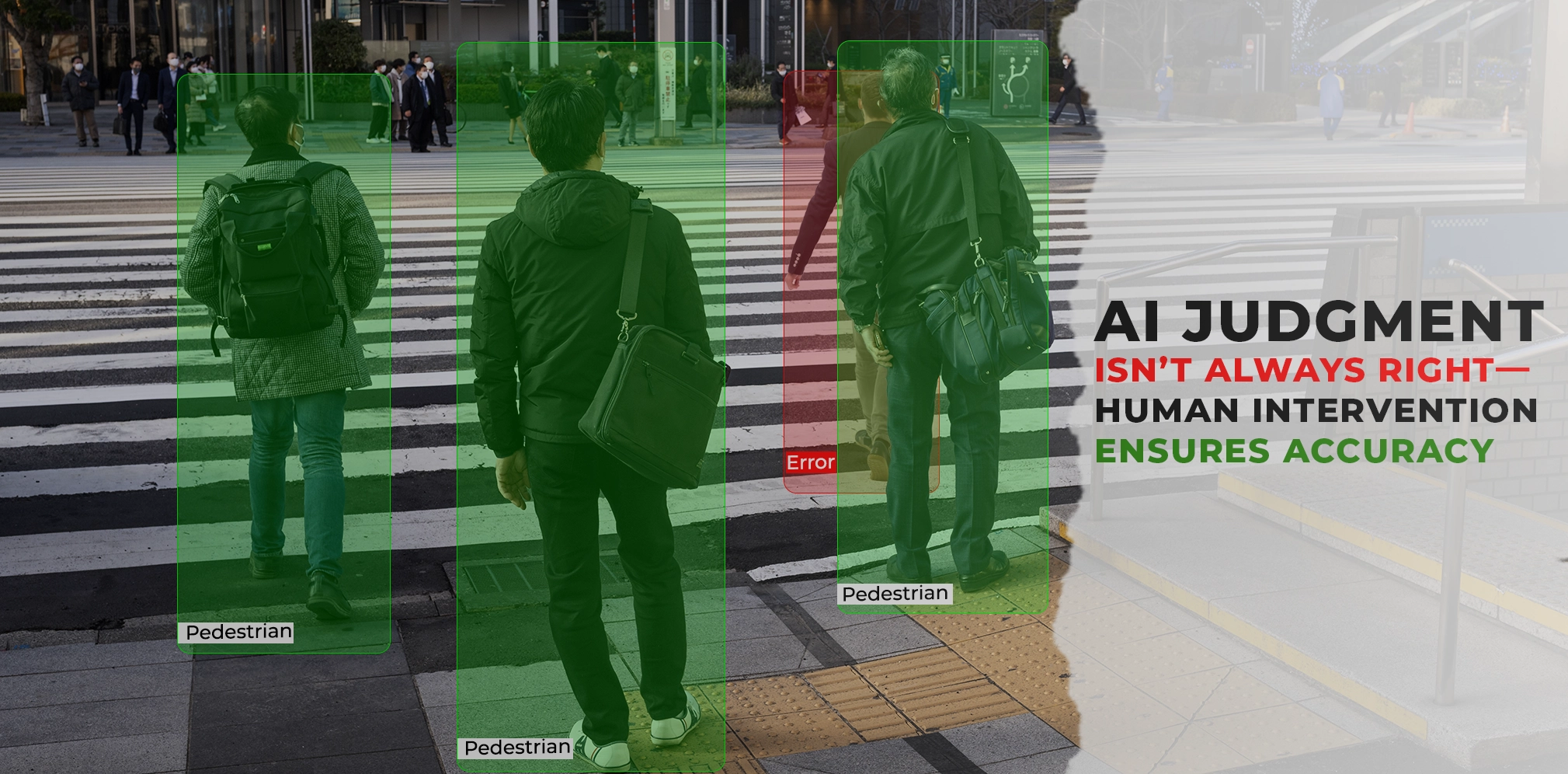
How Human-in-the-Loop Enhances Accuracy in Computer Vision Systems
Quick Overview This blog highlights the significance of Human-in-the-Loop (HITL) in boosting computer vision accuracy. It delves into how HITL methodologies enhance AI model performance by incorporating human validation during the training and annotation stages. The integration of human expertise mitigates errors, reduces bias, and ensures the accuracy of computer vision systems in complex applications.…
-
Experts-in-the-Loop The Future of High-Precision AI Systems
As we move beyond automation and into augmentation, AI is evolving from task-doer to decision-maker – from detecting diabetic retinopathy to deploying drones that sense wildfires ahead of time yet one principle stands firm: technology is only as precise as the human expertise guiding it; AI systems don’t learn autonomously. They require structured human input,…
-

How AI is Bridging the Opportunity Gap in Small Towns and Putting Them on the Global Map
Quick Overview This blog explores how Artificial Intelligence (AI) is bridging the opportunity gap in small towns, creating new job roles, and empowering local talent to compete on a global scale. It highlights how AI is transforming small-town economies by providing access to global markets, creating remote work opportunities, and upskilling youth. Key points include:…
-
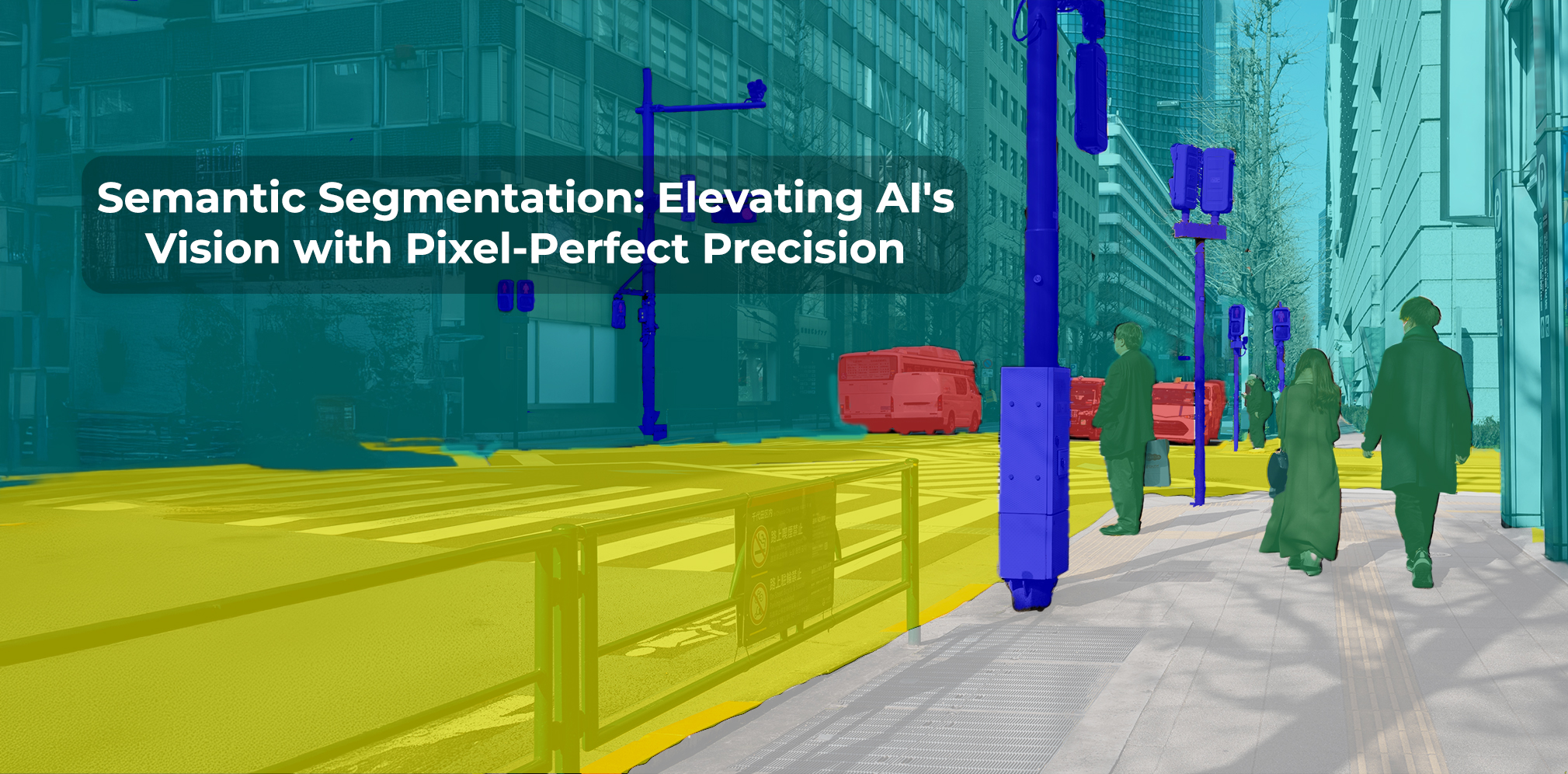
Semantic Segmentation: The Cornerstone of Visual AI!!
In today’s AI-driven world, the ability to perceive and interpret complex visual scenes is no longer a futuristic ambition—it’s a foundational need. Whether it’s autonomous vehicles navigating chaotic city roads or medical systems pinpointing anomalies in scans, the demand for precise, contextual visual understanding is rapidly growing. At the heart of this capability lies a…
-

Data Annotation and Labelling – How HITL Enhances Accuracy in AI Model Development
Quick Overview This blog emphasizes the critical role of data annotation and labelling in the development of accurate AI models, focusing on the integration of Human-in-the-Loop (HITL) methodologies. It explores how HITL enhances AI accuracy by providing human oversight during the annotation process, mitigating errors, and ensuring the integrity of complex AI applications. Key points…
-

The Role of Artificial Intelligence and Human-in-the-Loop in Fraud Detection
Quick Overview This blog explores how Artificial Intelligence (AI) and Human-in-the-Loop in Fraud Detection work together to enhance fraud detection. It highlights how AI-driven systems can identify suspicious activity and anomalies in real-time, while human-in-the-loop services ensure accurate decision-making by handling complex cases and reducing false positives. Key points include: Introduction Fraud is an ever-evolving…
-

The Importance of Human-in-the-Loop (HITL) Annotation in AI Training
Quick Overview This blog emphasizes the role of Human-in-the-Loop (HITL) annotation in refining AI model accuracy, particularly in computer vision. By combining human judgment with AI, HITL improves the reliability and fairness of models, especially in complex environments. Key points include: AI models are only as good as the data they learn from! constant—data quality…
-

What is Natural Language Processing and how does it help in conversational chatbots?
Natural Language Processing (NLP) is a subfield of artificial intelligence (AI) that is concerned with computers understanding text and speech and processing it to respond in a way that humans do. It involves training a system with data that the system is designed to process. In fact, even humans process natural language to understand what…